
Social vs. Solitary: Why Some Animals (and People) Need Space
- Dame

- Apr 20
- 2 min read
Updated: May 11
At first, this can seem like a simple difference in personality—some are social, others are more independent. But when you look closer, it becomes clear that this isn’t random.
In animal behavior, these patterns are shaped by survival.
This is part 2 of the Different Minds in Nature series.
Animals That Rely on Connection
Some animals depend on constant interaction to function.
Parrots communicate frequently, maintaining strong social bonds within their groups.
Penguins huddle together to conserve heat in extreme environments, making group behavior essential for survival.
Starlings move in large flocks, coordinating their movements with remarkable precision.
In these cases, social behavior is not optional—it is a key part of how these animals survive.
Some systems depend on connection. Without it, they cannot function in the same way.


Animals That Function Best Alone
Other animals are adapted to live independently.
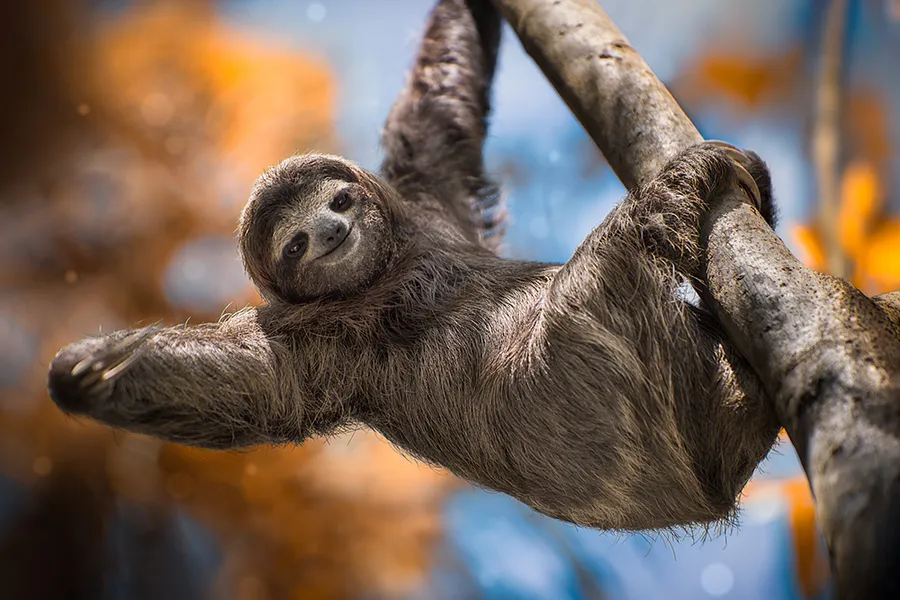
Sloths spend much of their lives alone, moving slowly and minimizing energy use.
Snow leopards are rarely seen together, relying on isolation and stealth to survive in harsh environments.
For these animals, independence is not a limitation—it is an advantage.
Not all systems are built for constant interaction. Some require space to function effectively.


Behavior Is Not Random
What may initially appear as personality differences is actually the result of adaptation.
Animal behavior is shaped by factors such as environment, available resources, and survival strategies. Whether an animal lives in a group or alone reflects what increases its chances of survival.
There is always an underlying reason.
Different Needs, Same Idea
This concept extends beyond animals.
Not everyone experiences or interacts with the world in the same way.
Some individuals thrive in social environments, while others need space, reduced stimulation, or more controlled settings to function comfortably.
These differences are often misunderstood, but they are not random.
They reflect different needs.
Different does not mean wrong—it means the system operates differently.
Look Closer ...
Understanding this changes how behavior is interpreted.
What environment is this behavior shaped by?
Does connection improve survival—or create risk?
When does independence become an advantage?
When observed more carefully, behavior becomes more understandable.
What This Reveals
Social and solitary behaviors are not personality traits—they are strategies. Each one reflects what allows an organism to function most effectively in its environment. What matters is not whether an animal is social or alone, but how that behavior supports survival.
Wild World Question
If some systems depend on connection and others depend on space…
How do we decide what kind of behavior is “better”?
Read more: Do Animals Sense Something We Don't?
Explore: Repetition in the Wild
If You're Into This
You might like majors like:
Neuroscience — how the brain processes social interaction
Zoology — studying animal behavior and adaptation
Ecology — how environment shapes behavior patterns
The more you look at behavior, the less random it becomes.


Comments